
Protecting wildlife and biodiversity are central to global attempts to reduce the extent and impacts of climate change. Protecting local natural environments are central to the physical and mental health of everyone everywhere. They are particularly critical for people on very low incomes who cannot simply move away from polluted and degraded environments.
However wildlife protection and promotion of biodiversity are far from simple issues with simple answers. In particular there are many questions to be asked about the complex balance between wildlife and people, and the challenges raised by trying to manage these competing interests involved.
– what is meant by ‘wild’? what balance is struck between ‘letting nature do its thing’ and managing ecologies.
– what is meant by ‘biodiversity’? who decides which species are to be encouraged and which are to be controlled? why and by which criteria?
– what is the impact of climate change? when do increased flooding, shifting seasons and hotter summers become a problem?
– what different community interests are involved? how are local people involved? how are potential tensions between public access and wildlife conservation addressed?
– which strategies work and which do not? for whom? what are the wider implications for biodiversity? how does this affect decisions and management?
‘In Defence of the Wild’ is a series of ongoing projects, beginning with projects for an on-line MA in Photography with Falmouth University, UK. Respect and caring for wildlife has always been central to my own sense of what it means to be human, and my sense of place in a beautiful but turbulent world. This long-term body of photographic work is therefore both a personal project and an activist one.

PH0710: Positions and Practice: initial scoping
This first module was an initial scoping exercise that:
– collated available printed and on-line links and literature on biodiversity strategies by councils and wildlife organisations in Cambridge and East Anglia.
– visited an initial sample of nature reserves in Cambridge and other edgeland areas along the River Cam to select areas of potential focus.
– visited and gained permission for photography on selected reserves in East Anglia managed by RSPB, Cambridge, Norfolk and Suffolk Wildlife Trusts and Wildlife and Wetland Trust, National Trust.
– experiment with different photographic approaches and styles.
Sept to December 2023
Aims
- locate my past and current practice within the broad contexts of professional contemporary photography.
- consider the importance of research in both academic and industry contexts.
- critically reflect on core themes in contemporary visual culture.
- analyse my practice in relation to specific themes.
- articulate my practical and conceptual motivations and intentions as an image-maker.
Topics and themes:
- Mirrors and Windows: what does photography mean for you?
- Methods and Meaning: exploring how methods and processes impact image narrative and meaning.
- Reading Photographs: structures by which we interpret images.
- Authorship and Collaboration: rethinking authorships and the importance of collaboration.
- Interdisciplinary Practice: photography in relation to time, stillness and motion.
- Words and Pictures: exploring the relationship between photography and writing, and image-text pieces.
- Audience and Institutions: exploring the role of audiences and institutions and their impact on styles, approaches and attitudes to photography.
- Nature and Culture: exploring sustainability and environmentalism, and the idea of nature.
- Photography, Power and Others: considering the inherent power relationships within photography and the potency of its gaze.
- ‘After’ Photography: rethinking photography and identity in the digital age.
Inspiration:
Stephen Gill Birds taking off, Trail Cam footage.
Uta Barth
Home Truths 1: Windows to the Wild Present Time Passing
https://photography.zemniimages.info/portfolio/home-truths-windows-to-the-wild
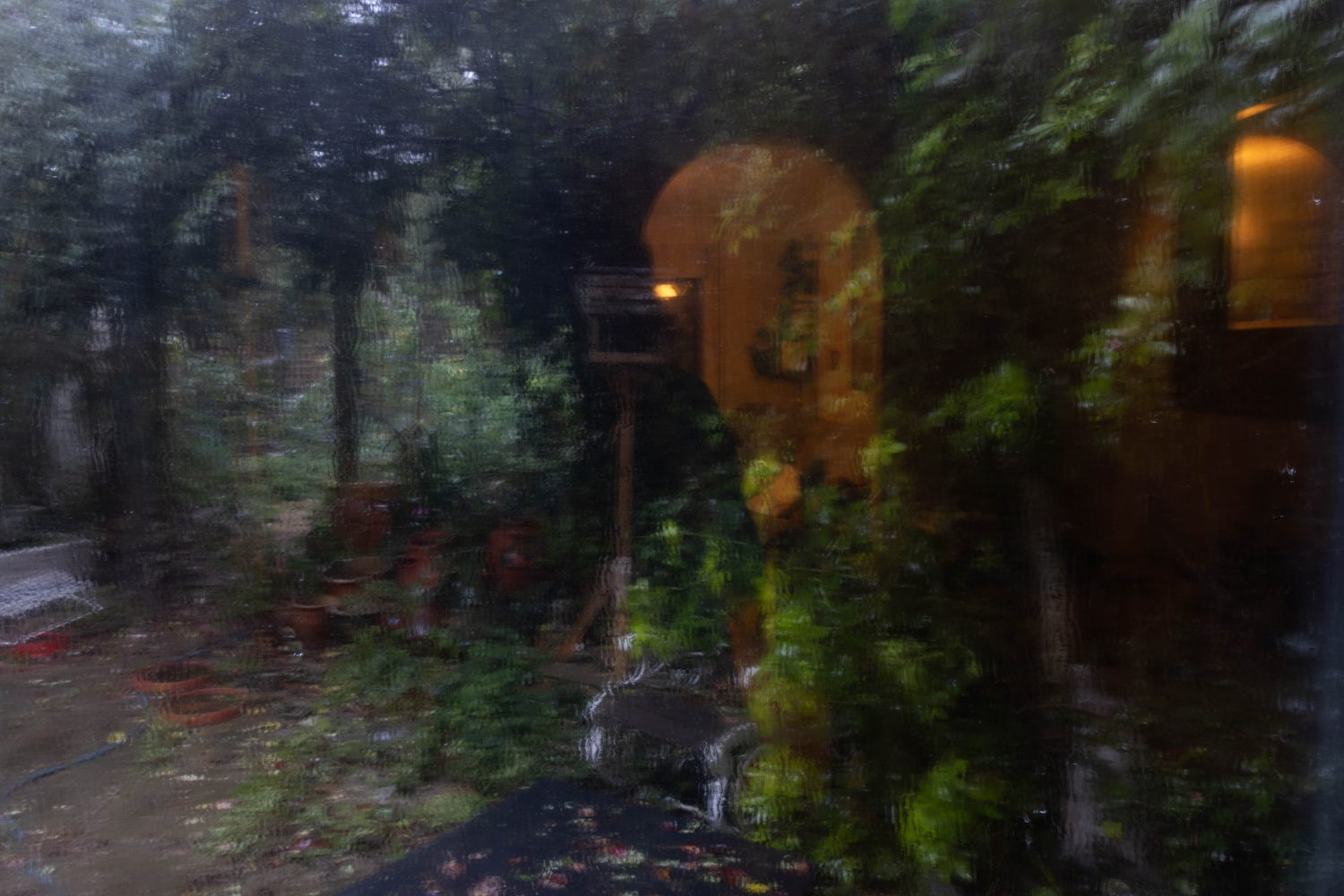
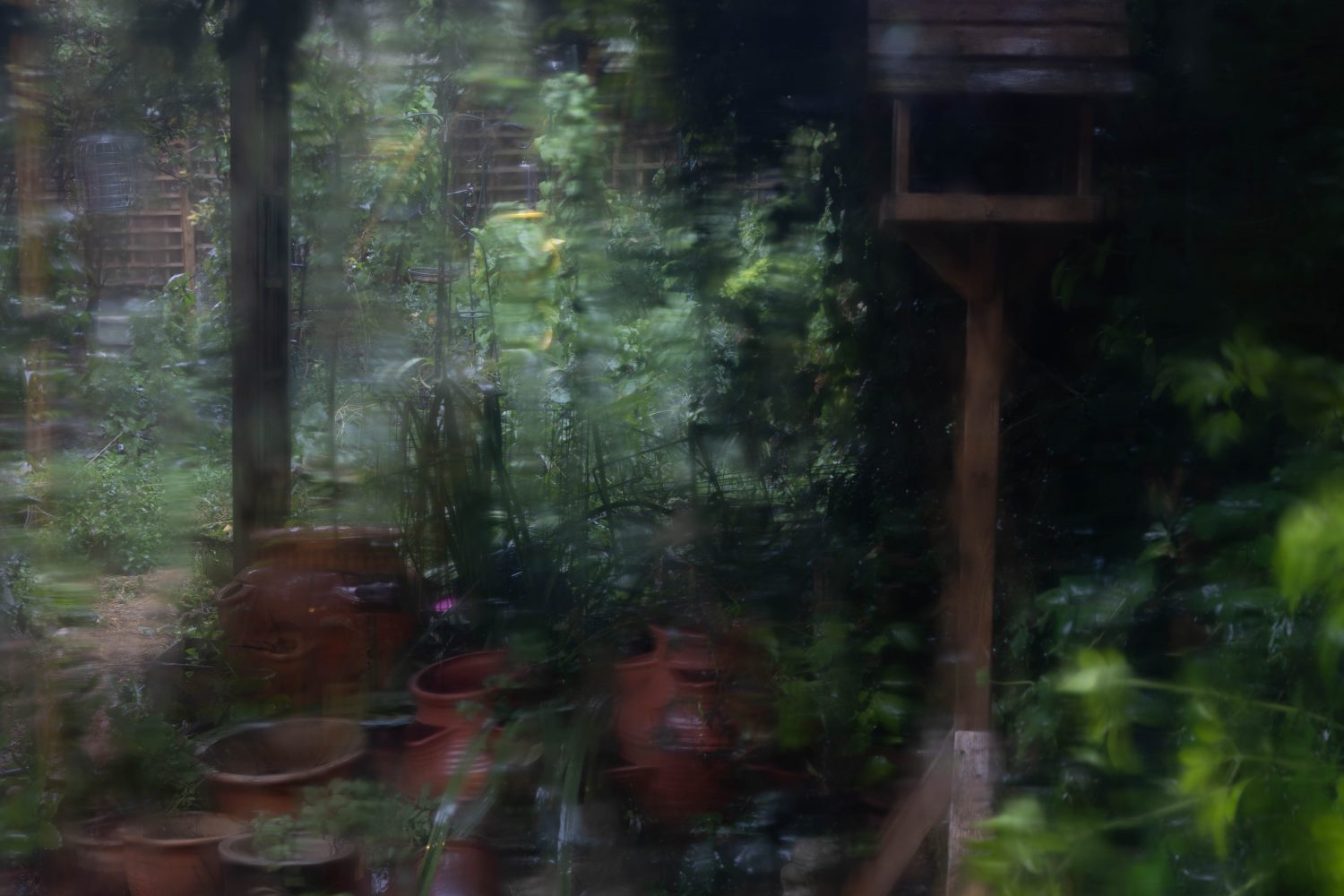
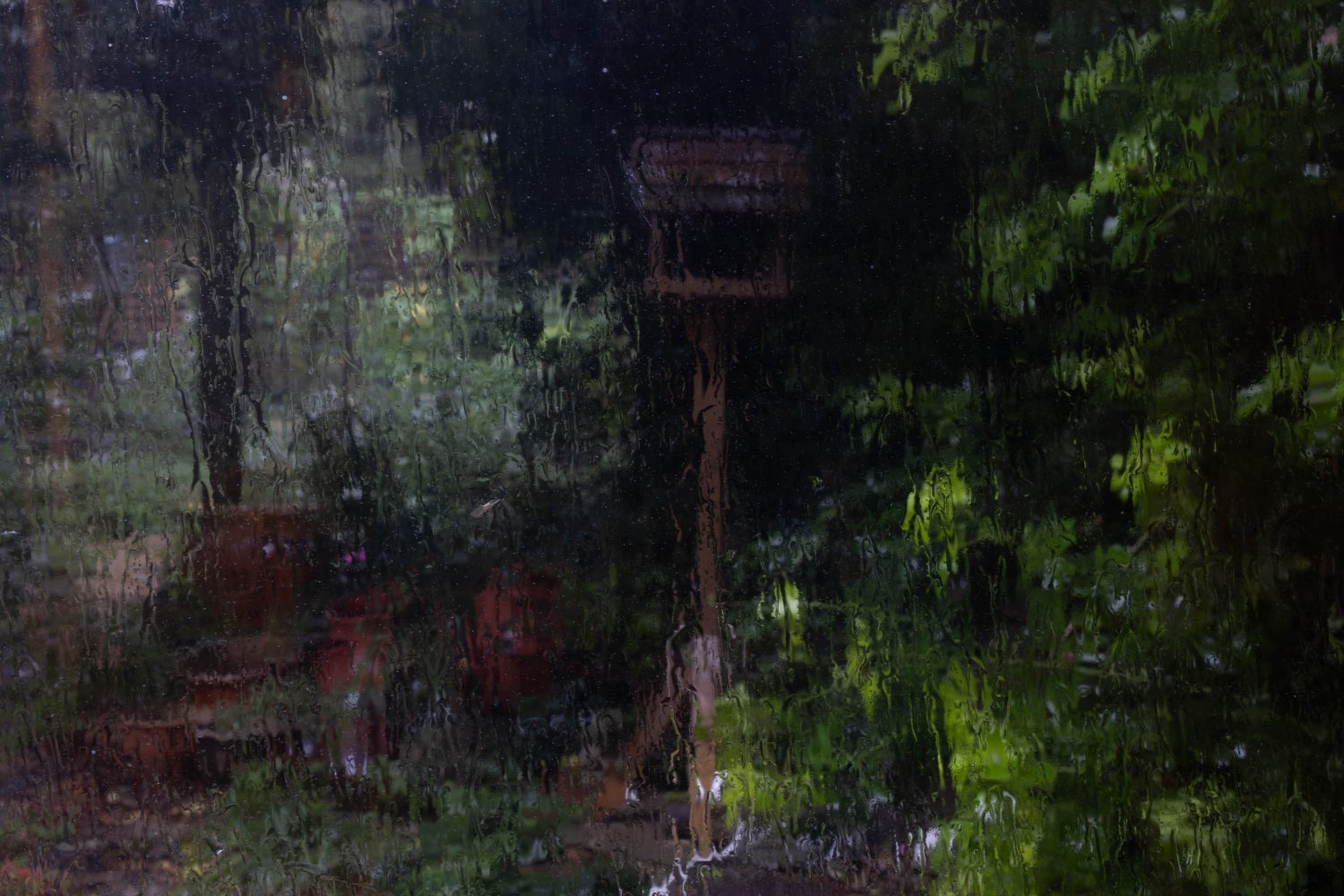
- ‘Timelessness’
- Times of day
- Changing seasons
- Solarpate, cyanotype and screenprints
- Moving image
I am particularly interested in the nature of light at different times, ways in which light changes and the process of digital capture to either record light accurately or camera adjustments to ‘make a better image’. And how this changes with different colours and techniques.
Home Truths 2: Journeys with Hindsight
https://photography.zemniimages.info/portfolio/home-comforts-journeys-with-hindsight
PH0720: Informing Contexts: Cambridge Wildlands
December 2023 – April 2024
Informing Contexts aims to consider my own practice and develop an informed and sophisticated contemporary photographic practice in relation to:
- critical contexts relating to visual culture and practices
- debates around the nature of the photograph, concepts of looking and subjectivity
- critical and theoretical contextualisation.
- historical, philosophical and ethical perspectives around photography and visual culture.
Cambridge Local Nature Reserves are not sublime untamed ‘wilderness’. Some Reserve landscapes have been transformed by humans since the Iron Age. Some revive ancient pathways, streams, rivers, wetlands and woodlands that have existed for many centuries. Others rewild depleted marginal environments. Yet others were newly created in1990s on land ear-marked for development, but deemed geologically unsuitable for housing or industry.
These are inherently contested landscapes. Whatever their history, all Cambridge LNRs are near to housing estates, schools, sports facilities, roads and/or railways stations. They are not silent. Imagine sounds of birds and bees competing with muffled traffic, airplanes, helicopters, garden lawn-mowers and schoolchildren playing. There are people – dog-walkers, cyclists, sometimes tourists. Some visitors are lonely. Others go to enjoy solitude and mental quiet. Enigmatic shrines remember lost toys, people, pets. There are doggy bag trees, litter, fly-tipping, graffiti, vandalism, temporary tents of rough-sleepers and drug dealer dens. There is undoubtedly ‘interesting’ wildlife – squirrels and foxes leave traces of destruction. But seeking out all the rare species listed on the council website may further disturb their peace.
Many Reserves conduct scientific studies and experiments to develop more sustainable futures where people and nature can co-exist. My longer term ongoing project ‘Cambridge Wildlands’ aims to contribute documentary, subjective and imaginative images exploring some key questions I have:
– what is ‘wild’? ‘letting nature do its thing’? conserving complex ecologies?
– what is ‘biodiversity’? which species? which criteria? what are the impacts of climate change ? which species are harmed? benefitted?
– what works? for whom? are diverse community interests involved? who should decide? how?
But January to April 2024 was a very difficult time for me. Plans for walking documentary diaries proved impossible. Hypersensitivity to neighbours’ wood-burning stoves and along streets where I walk led to extreme feelings of claustrophobia and depression. I do not have a car . Road traffic pollution limits my ability to cycle or wait for buses. Plans quickly narrowed to specific no-burning hours at Bramblefields near my house, and periodic days when my partner could drive and accompany me to other reserves. All this slowed my emergence from COVID-19 isolations. I could not to shut out 24/7 TV News of wars in Gaza and Ukraine. Women in Afghanistan and Iran now hidden, looming famine in Sudan and sub-Saharan Africa – all places where I have worked.
‘Reflections in Nature’ are therefore also subjective narratives: my process of release from claustrophobia, glimpses of freedom in these rather often messy and chaotic, but also beautiful landscapes. Dreams of the coming Spring, and its (assumed) certainty, helped me through. I visited and revisited these spaces, seeing different things every time. But I was no longer sure what ‘Spring’ meant any more. ‘Spring’ flowers, insects , birds could be seen on warm sunny January days, disrupted by days of ice, then flooding from three times normal rainfall through February and March. When could I be sure ‘Nature’ might be temporarily back on track before the predicted record-breaking 2024 summer heat?
PH0730: Living with Weeds: Where Bluebirds Sing
(May – August 2024)
A series of fictional animations exploring ideas of natural mutation, change and human interventions in the natural world. The focus is on our attitudes to ‘weeds’ – when and why do ‘wild flowers’ become objects of fear, control and attempts at elimination? Using still photographs of weed micro-worlds in summer 2024 using macro and telephoto lenses, the animations experiment with:
– the ways in which the brain perceives patterns within pixels, automatically searching for faces, creatures and landscapes, and the ways in which perception can be manipulated through simple changes in focus, depth of field, tone, sharpness and colour.
– visual manipulation and AI invention that create an illusion of past ‘harmony’ and beauty in nature from everyday weeds.
– how this ideal vision can morph into future visions of utopia and apocalypse.
Underpinning this work is research on ecological science and discussions with biodiversity experts in Cambridge and elsewhere. I also work with other Falmouth photographers from Landings for a joint exhibition in July 2024.
The approach is generally light-hearted, aiming to entertain rather than preach, but the animations also try to be effective in provoking questions about current attitudes to natural aesthetics, genetic science and human responsibility towards our environment.
P0740: Making Kin with Hellweed: Staying with the Trouble
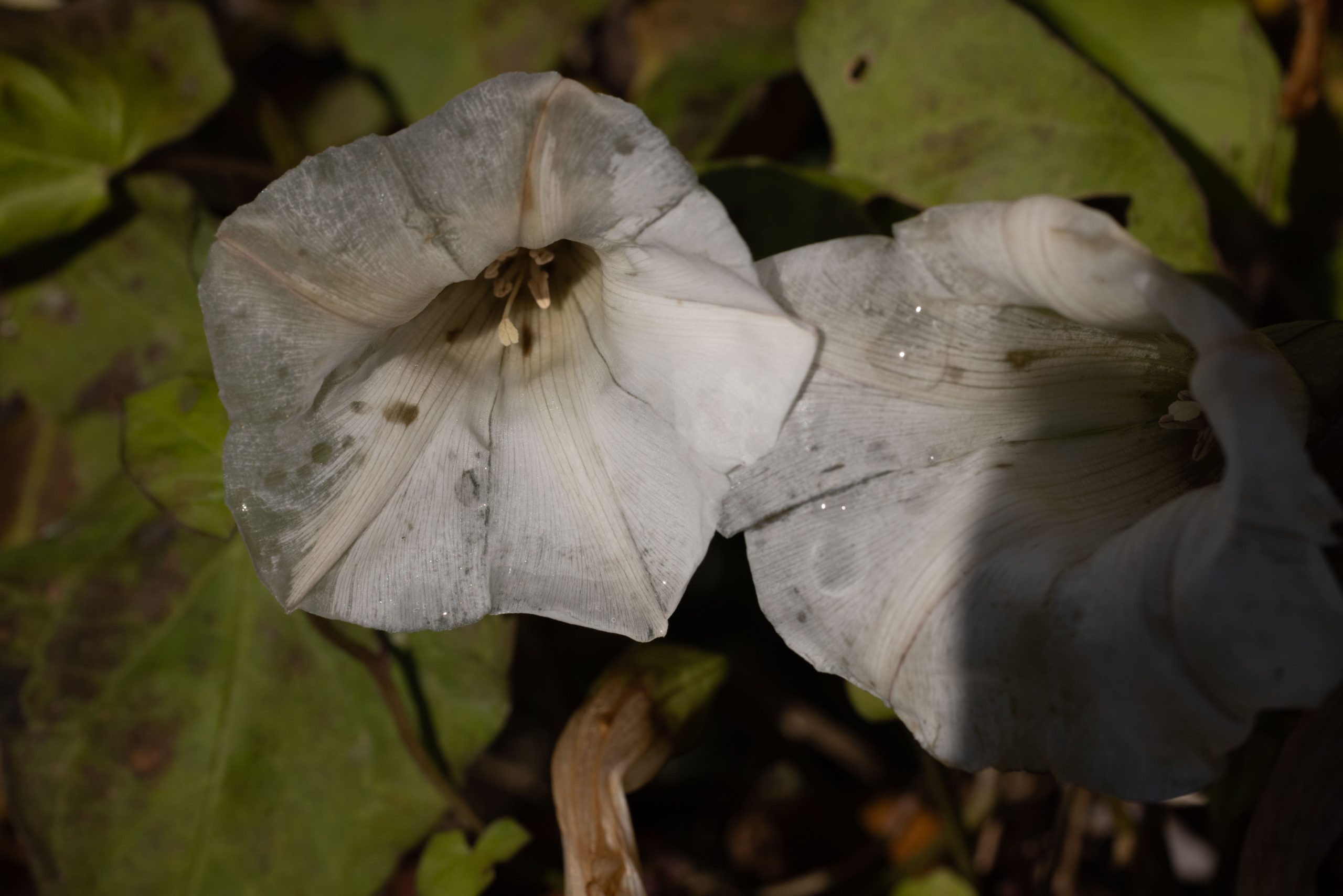
Making Kin with Hell Weed arises from my own concern to be a responsible wildlife gardener – balancing the needs of environmental sustainability and biodiversity in my garden. It draws particularly on the writings of eco-feminists like Donna Haraway on ways of ‘making kin’ between humans and other non-human species. It is also underpinned by the compelling body of recent research since Darwin on plant intelligence, and botanical information about Bindweed itself.
The interactive slideshow invites the viewer to consider the possibility that Bindweed, like other plants in my garden, is in many ways a sentient, intelligent and fascinating co-participant in a complex eco-system, not an invasive existential threat to be completely eradicated by the ‘conscientious gardener’ by any means possible.