Category: 1: Positions and Practice

  • Semiotics Signifier Signified

    (to be looked at again when I study Barthes in my Illustration course)

    TASK

    Find an advert from a magazine, newspaper or the internet, which has some clearly identifiable signs. Using the example above to help you, list the signs.

    What are the signifiers? What is signified? Read:

    Roland Barthes essay ‘Rhetoric of the Image’ (1977) 

    to help clarify your understanding of these principles. You might find Barthes hard going at first, but please persevere. The way in which meaning is constructed in an image is directly relevant to photographic practice.

    For an example of the dissection of an advert by

    Marlboro Men

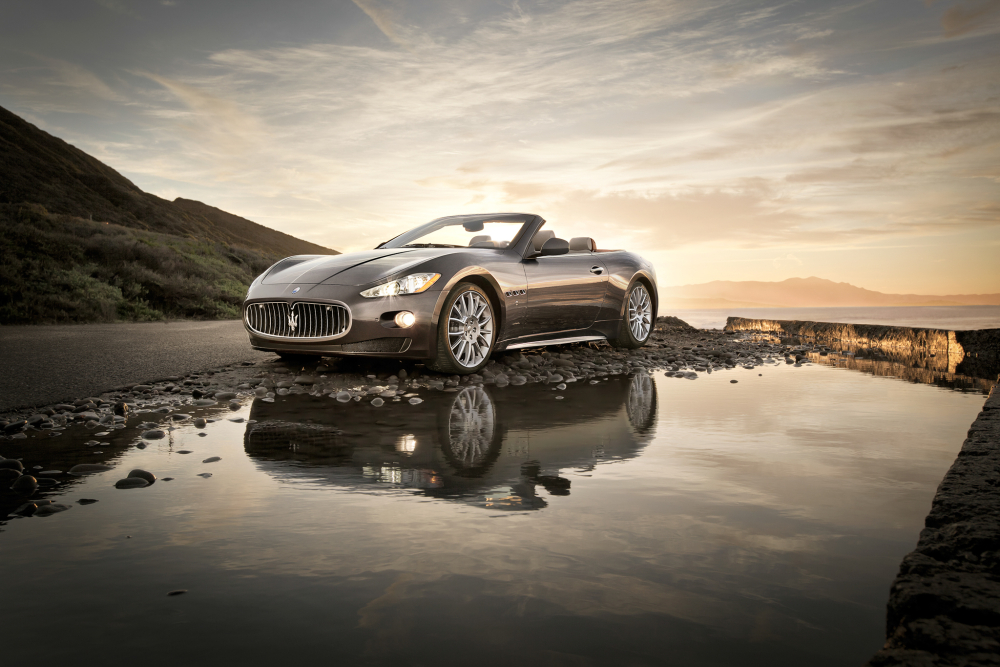
    Motoring advertising provides some of the most spectacular imagery: vehicles are often anthropomorphised – heroic against the elements or nimble on ice or intelligently negotiating streets and saving the family. See:

    There have also been some superb parodies of ad campaigns(including Marlboro) as well as ingenious campaigns for not-for-profit organisations, see:

  • Thomas Struth

    Thomas Struth (born 11 October 1954) is a German photographer who is best known for his Museum Photographs series, family portraits and black and white photographs of the streets of Düsseldorf and New York taken in the 1970s. Struth currently lives and works between Berlin and New York.

    http://www.thomasstruth32.com/bigsize/index.html

    https://en.wikipedia.org/wiki/Thomas_Struth

    In German.

    Urban

    Dusseldorf

    http://www.thomasstruth32.com/bigsize/photographs/duesseldorf/index.html

    In 1976, as part of a student exhibition at the Academy, Struth first showed a grid composed of 49 photographs taken from a centralized perspective[4] on Düsseldorf’s deserted streets, each of them obeying a strict logic of central symmetry. The compositions are simple and the photographs are neither staged nor digitally manipulated in post-production. Strong contrasts of light and shade are also avoided, Struth preferring the greyish, uninflected light of early morning. This serves to enhance the neutral treatment of the scenes.

    Unconscious Places

    Through 1979, he continued to photograph the streets in Düsseldorf and also for the first time in other European cities including Cologne, Munich, Brussels, Charleroi and Paris. After the concentrated experience of working in different parts of New York City, the process of identifying locations which expressed most clearly the nature of the city became more precise. Struth now worked with greater precision and economy. He spent more time looking for the single location which could “summarise a city” and made comparatively few photographs in each city—no more than five in Charleroi, for example, or ten in Munich.

    Towards the end of 1979 Struth travelled to Paris to visit Thomas Schütte, a fellow student at the Kunstakademie Düsseldorf, who had a residency in Paris. Schütte suggested looking at the Beaugrenelle project in Paris, a huge urban development for mixed commercial and residential use with several distinctive high-rise towers built on the banks of the Seine in the 1970s.

    http://www.thomasstruth32.com/bigsize/photographs/unconscious_places_1/index.html

    Struth recalls wanting to “work with distance, to keep an open and innocent gaze, to work without any personal narrative or experience of the city.” He was struck by the anonymity of the architecture, the complete lack of any visible historical continuity and identity in a conurbation shaped by the rupture of colonialism and its consequences.

    http://www.thomasstruth32.com/bigsize/photographs/unconscious_places_2/index.html

    China and Japan

    “For a visual artist, the gaze is critical. And the gaze has to do with the distance between your own entity and what is in front of you. The pronounced cultural distance of Japan from Europe, the unfamiliarity of my experience there, helped me to arrive at a more precise observation and understanding of my own culture.”

    http://www.thomasstruth32.com/bigsize/photographs/japan/index.html#
    New Pictures from Paradise

    The first eight of the Paradise pictures were made in the tropical rainforest in Daintree in the northeast of Australia in 1998. Struth then made several works in Yunnan province in China, on the island of Yakushima in Japan, and in the forests of Bavaria, Germany, in 1999.

    http://www.thomasstruth32.com/bigsize/photographs/new_pictures_from_paradise/index.html

    See also family portraits

  • Mirrors and Reflections

    Mirrors and Reflections

    We never look at just one thing; we are always looking at the relation between things and ourselves

    John Berger, Ways of Seeing

    Photography is not, and cannot be an ‘objective’ art. Although the camera can only capture light bouncing off objects that are in front of the lens, the photographer behind the lens will always be making subjective judgements about:

    – what exactly to include in and out of the image and composition

    – when to take the image to include what they want in terms of eg action and lighting

    – how to take the image eg type of lens, depth of field, shutter speed

    Although all the above are affected by technological possibilities and constraints of particular cameras that have changed over time, photographs have always been made in relation to the photographer’s subjective purpose for the image:

    – feelings about the object (even if photographing cells under a microscope)

    – intended communication of those feelings for a particular audience

    – subjective reactions of different audiences to the image

    Lee Miller: A Portrait of Space

    Rick Poynor Exposure: Portrait of Space by Lee Miller in Design Observer 11/17/2015 (Links to an external site.)

    Lee Miller’s photograph is really intriguing – and becomes even more so the more I look and then read how it was made and constructed. I first saw Lee Miller’s work about 20 years ago at an exhibition in Paris. 

    When I first saw the image in the context of the topic thread here, I assumed that the rectangle was a small looking glass like the ones one often sees in bathrooms in India and Islamic countries. So a blank mirror reflecting nothing back of the photographer as if her mind was clouded, blank and probably depressed. Echoing then the arid stone desert outside. Obviously somewhere like Egypt or North Africa/Arabia but no culture or distinguishing features to be seen. A bleak landscape through a torn curtain seen by a blank mind. Just space.

    But when I looked up the discussion about how this particular version of the scene was constructed and why it was selected, I discovered I had misunderstood.

    Lee altered the framing of the whole photograph to try to accommodate a rectangular window in a square format camera exposure. The version seen here is taken very much closer to the window than earlier takes to de-emphasise the window, and focus more on the torn curtain.

    The ‘mirror’ is not actually a mirror at all, but one of a number of versions of framing that direct the viewer’s eye. In other versions the small black frame was positioned to focus on the escarpment on the left that was positioned so that the top converging lines of the curtain led the eye to the frame. It seems this was because the cabin where she stayed was one used by officials and visitors who might be more interested in the only ‘landscape feature’, rather than the stone desert. Placing the frame so that it frames part of the washed out sky is the ‘Portrait of Space’.

    But the viewer can choose where they look in the frame and let their gaze wander through different spaces, including examination of the torn curtain that now provides another frame, rather than a device to direct the eye to the horizon.

    So this is an image that is a choice of different windows, but actually revealing very little of what ‘objectively’ exists. The mirror being I think less a reflection of the photographer, than of what the viewer chooses to look at. And how far they choose to see past what the photographer has hidden through the device of the curtain.

    My own work

    In my own work I range across a whole continuum from windows to mirrors, and the various barriers between. Some of my projects  have been research-based more documentary images eg in preparing a Blurb photobook Anywhere Road I consciously question a range of different perspectives and photographic interpretations to become more aware of my subjectivity – and discovered a lot of new things in the process. Others projects are much more obviously my own interpretation of what I see. I have also been very interested in photographic textures eg in wood and stone that suggest fiction narratives but inspired by the particular location.

    Through the Window Pane

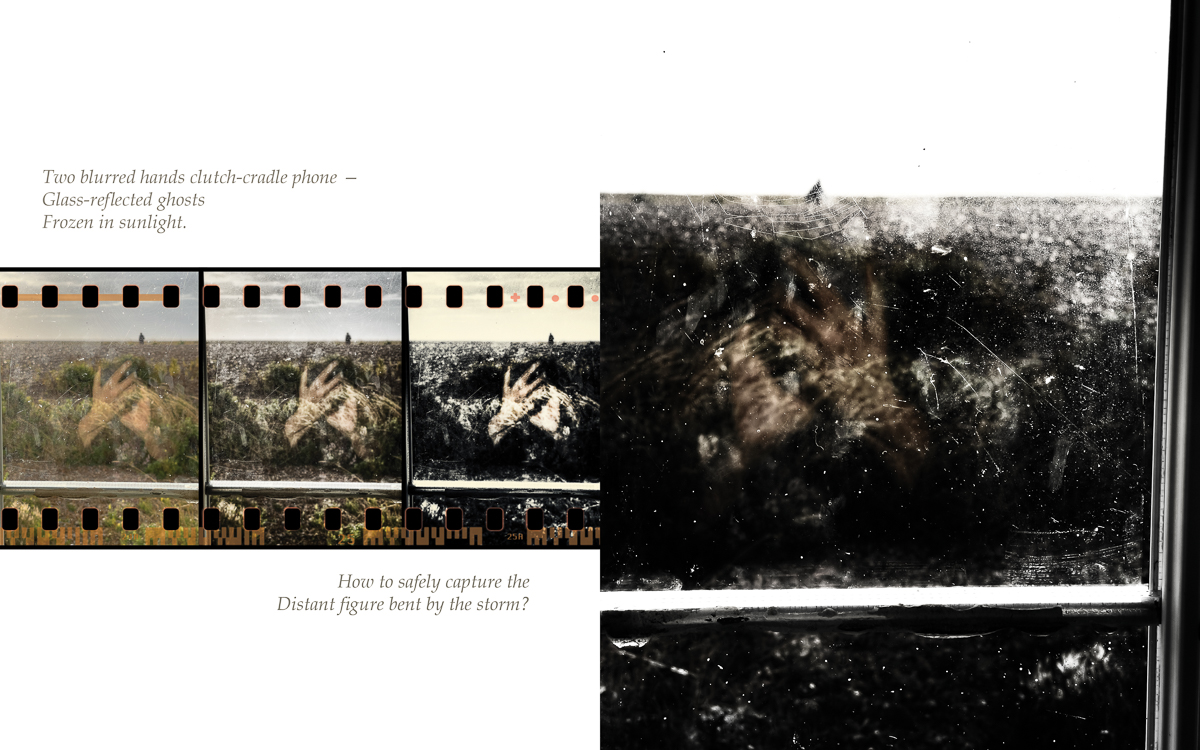
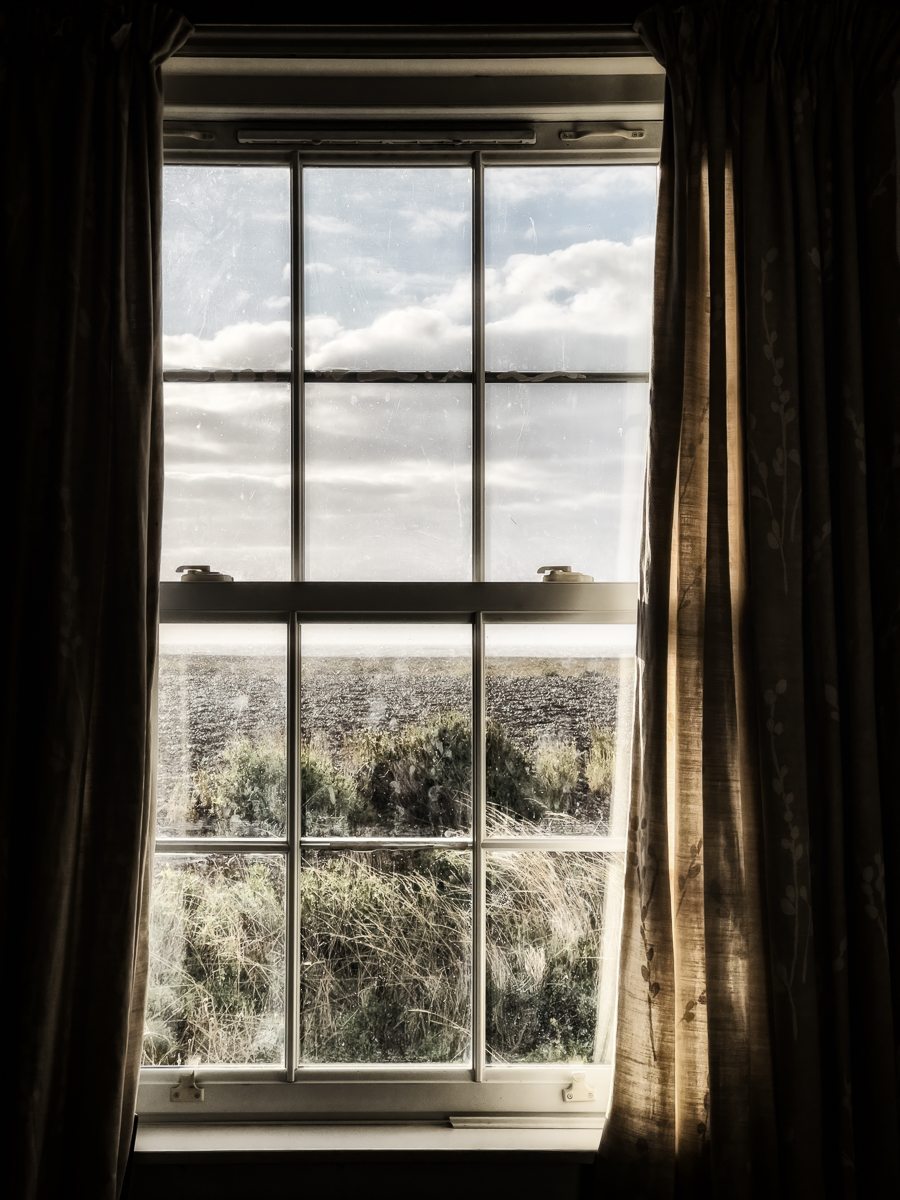
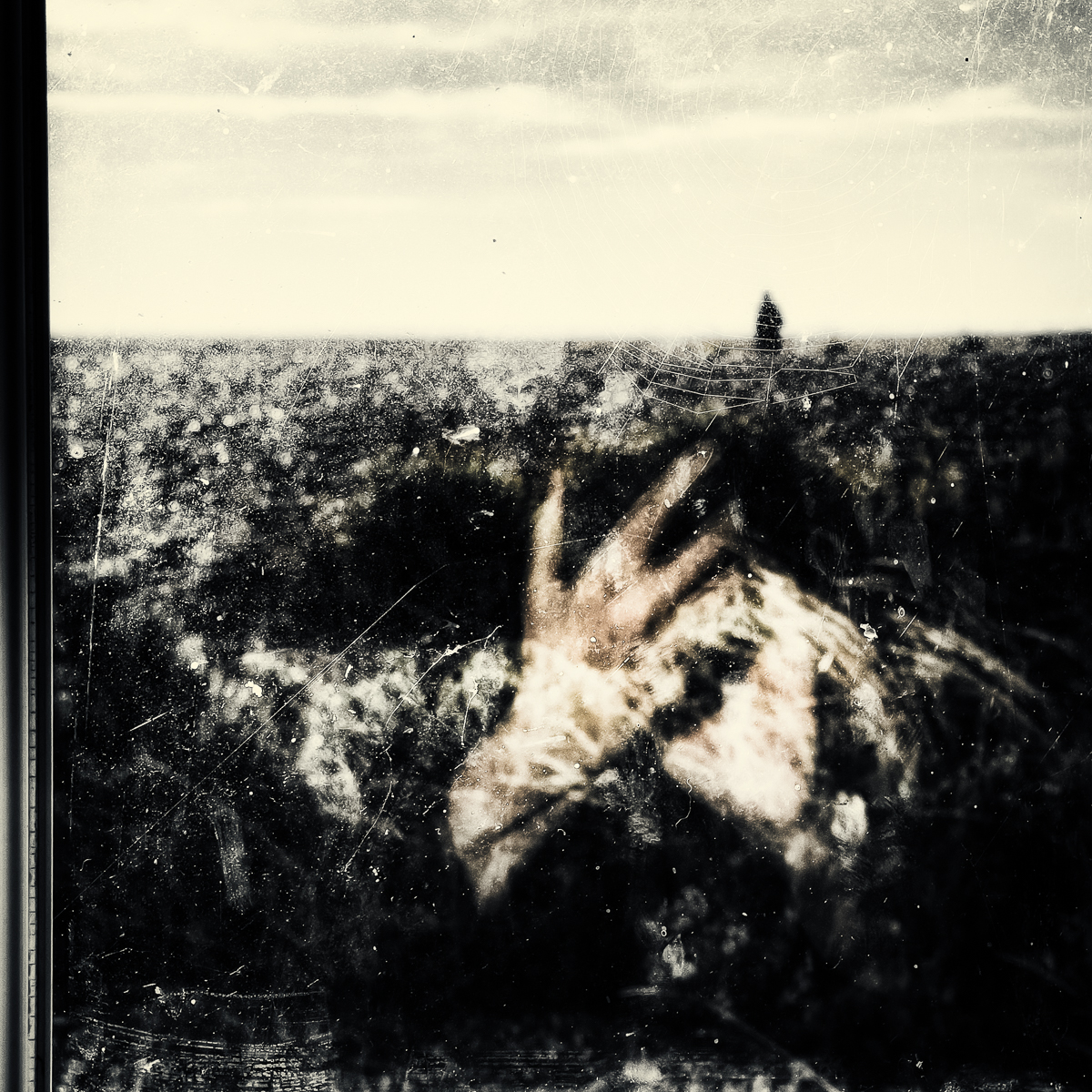
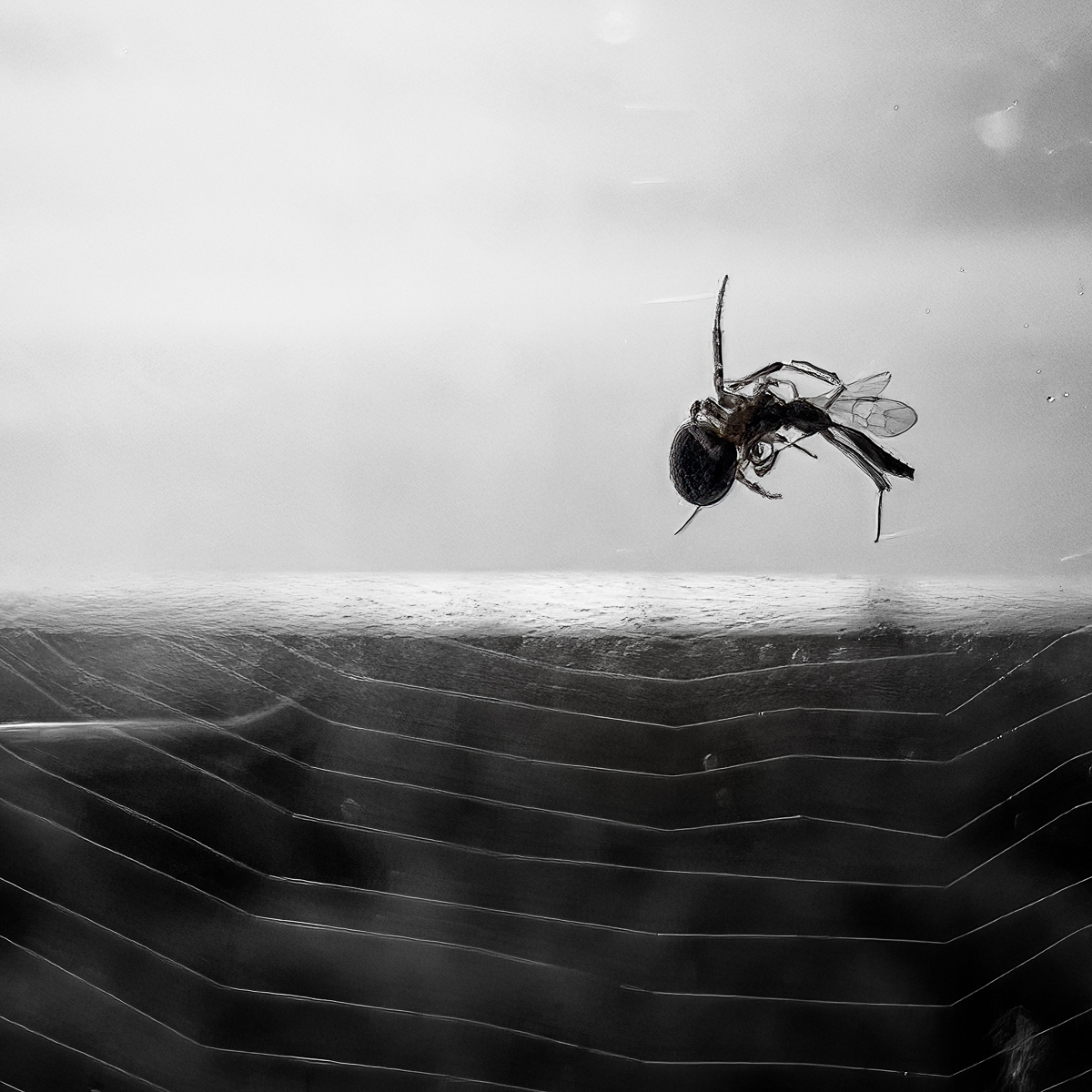
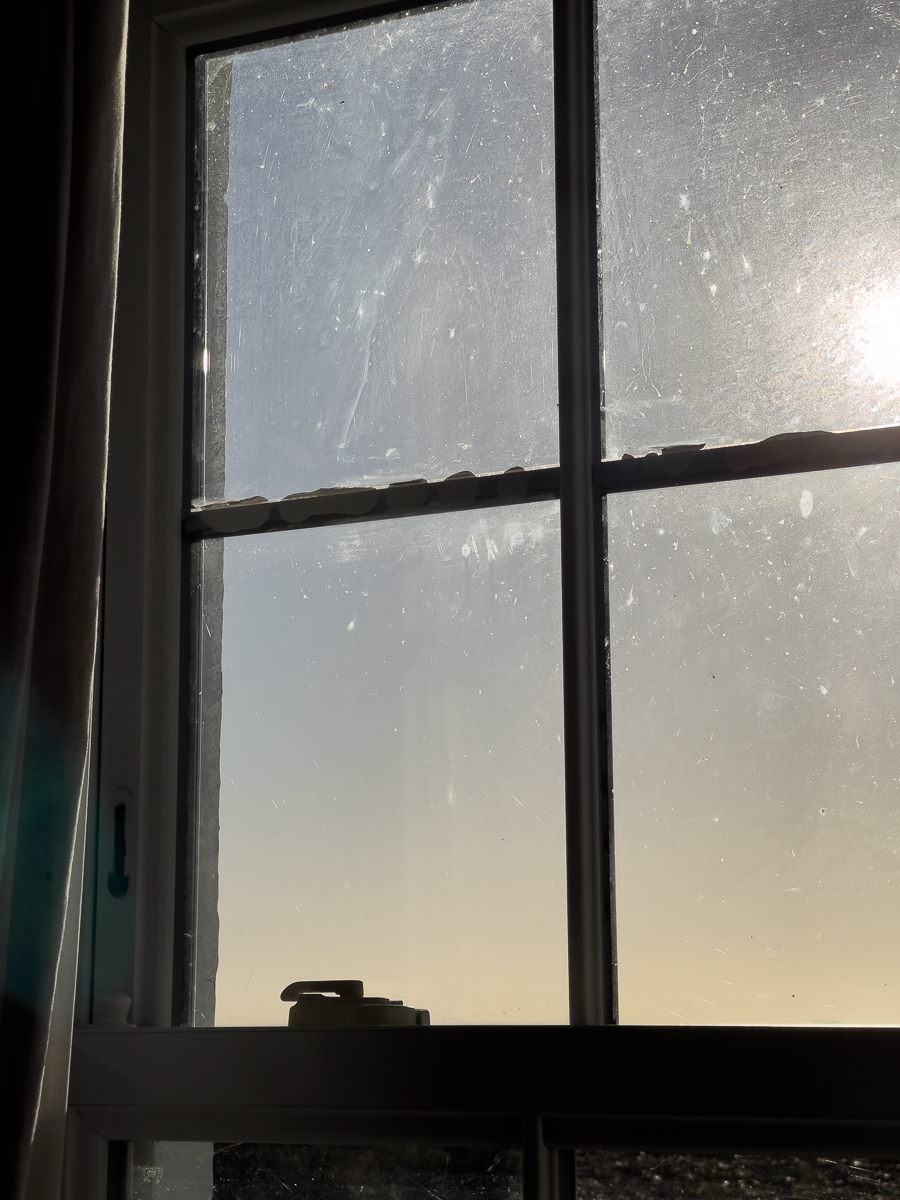
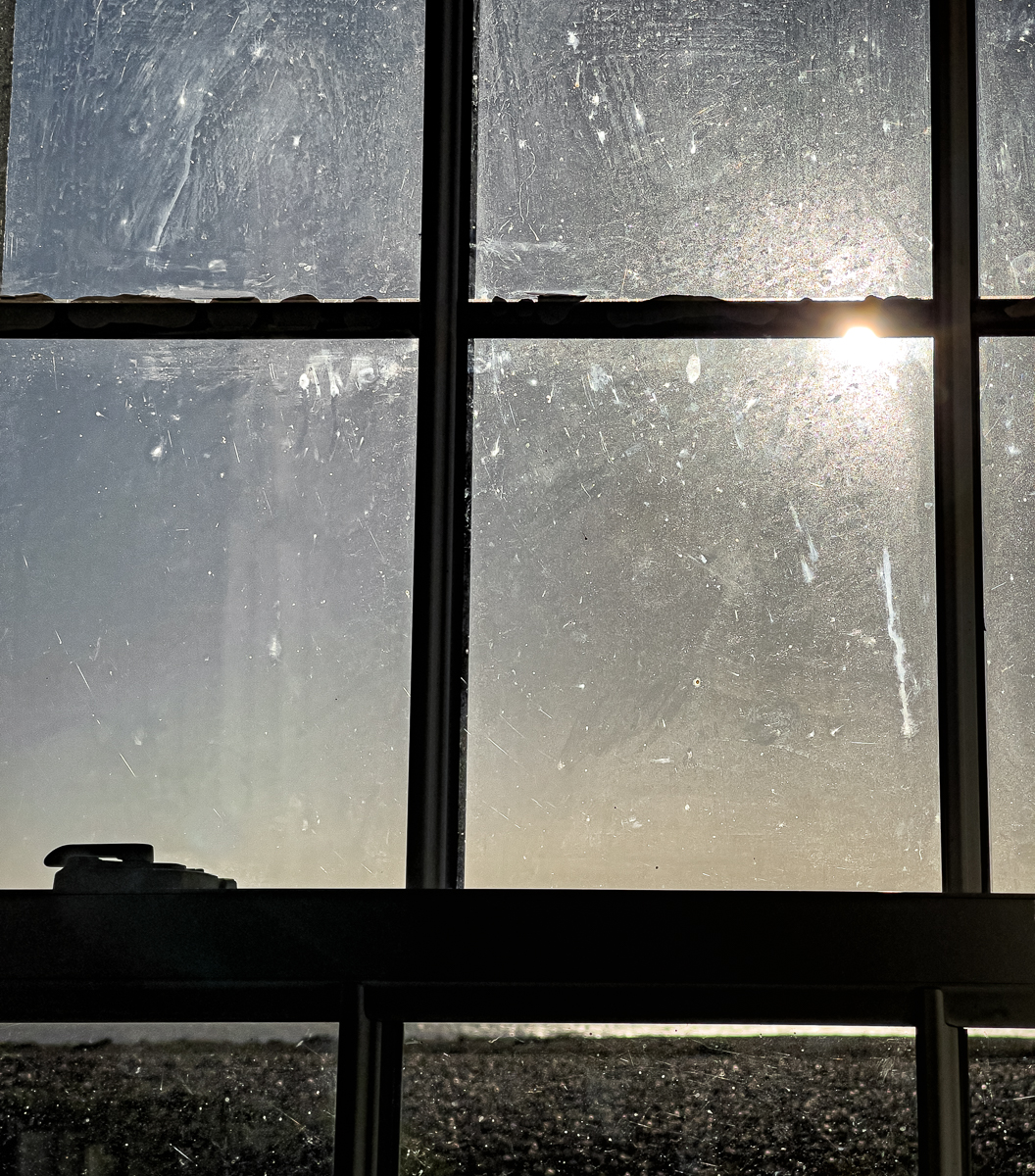
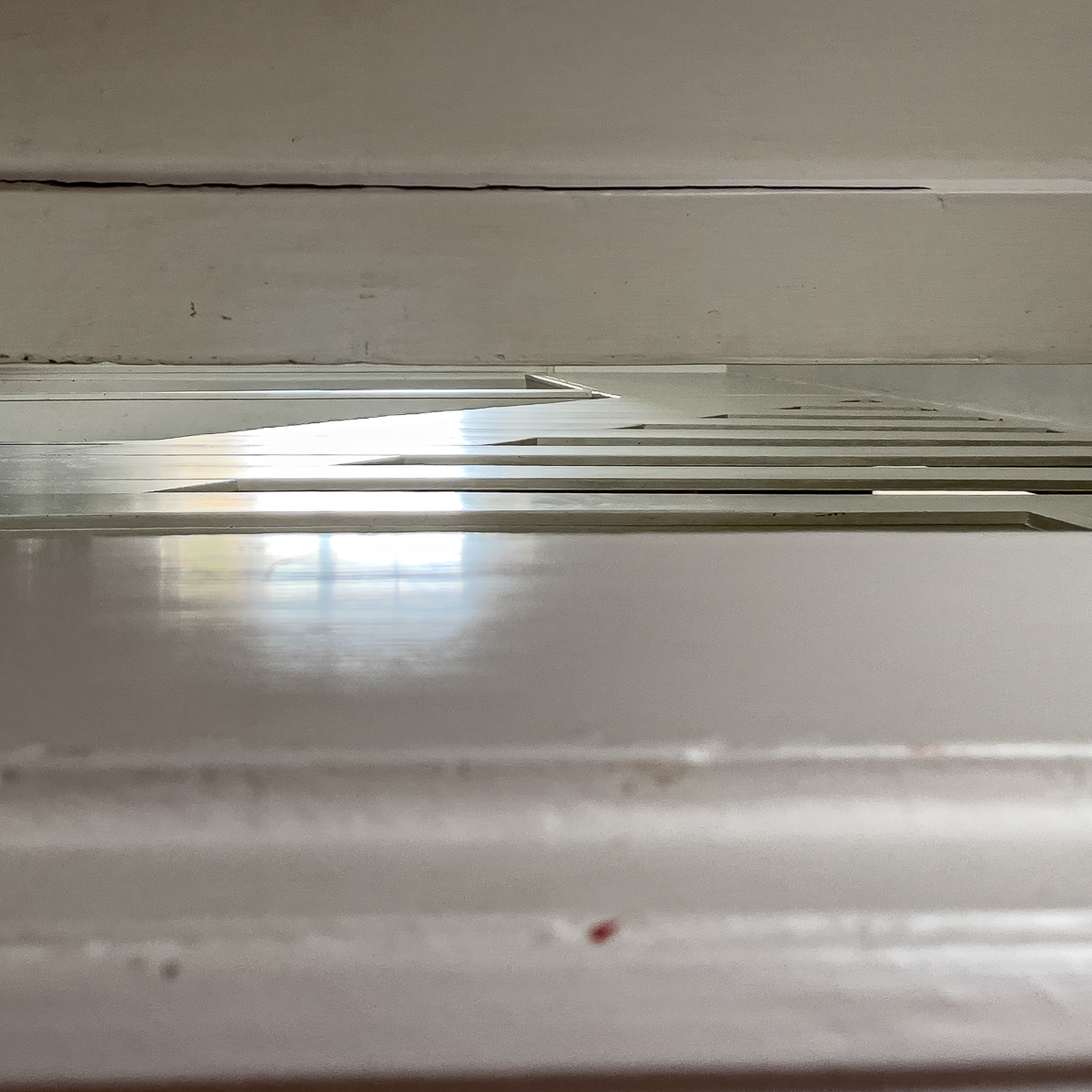
    One project ‘Through the Window Pane’ was shot in Shingle Street on the Suffolk Coast, referencing Alice Through the Looking Glass and clouded mirrors that distort and put things back to front.. I had unfortunately hurt my ankle just a day before the trip, so could not go out. And I was imprisoned watching Liz Truss’ budget and ware in Ukraine on the TV, just looking through the window. So I decided to make the most of it through a photoseries of the changing light, weather and views on my iPhone. This does I think indicate a lot about myself, what I choose to shoot and also select, how I interprete and then also manipulate what I have shot to further communicate my mood and sometimes a message.

    Through the Window

    Reflecting the Photographer

    What is on the ‘window lens’ distorting my view?

    Through the Window Pane Blurb Photobook  with poetry and text (Links to my SMUGMUG external website.)

    Cracks in the Edge

  • Authorship and Collaboration

    Authorship and Collaboration

    Task

    Whether working directly with another photographer or practitioner in the creative process,
    drawing upon the work or materials of others can offer new ways of thinking and new
    opportunities for creative output. Collaboration is also integral to operating effectively in
    professional arenas: you’ll need to utilise expertise that, for whatever reason, may not be
    readily accessible to you. Developing a positive approach to collaboration will lead to more
    opportunities and potentially make your practice more engaging.

    Reflect on your creative practice – your photography – and also maybe aspects of your life
    beyond or outside of this:

    • How have you allowed the input of others to shape your photographic practice?
    • What is your attitude towards drawing from the ideas of other people, or their work?
    • How do you discern between ‘collaboration’, ‘appropriation’ and ‘plagiarism’?

    “…we all more or less take the same photographs…But we don’t learn that at school and our parents don’t tell us, so there must be some kind of unspoken or unconscious code, of how we want to depict our lives, or our societies and this is not very well researched. We all contribute to that, there is not much originality and that’s also true for most of the photography we find in the art world. You find the same repetitive patterns there, they are just more consciously elaborated.”

    Joachim Schmid in CASPER, 2013 quoted Coursse material.

    “While the intent of photographing a sunset maybe to capture something ephemeral or to assert an individual subjective point of view – the result is quite the opposite – through the technology of our common camera we experience the power of millions of synoptic views, all shared the same way, at the same moment. To claim individual authorship while photographing a sunset is to disengage from this collective practise and therefore negate a large part of why capturing a sunset is so irresistible in the first place.”

    Penelope Umbrico in ALEXANDER, 2015: 61

    Project Process

    Keith Mason’s Proposal

    Place from Sunrise to Sunset – the differences between us (geography and life) and the similarities.

    Concept – take pictures of the sunrise and sunset on a particular day this week, plus three during middle of the day (say 11am, 1pm, 4pm).  Your shots could be from the same location (front door step) or varied. The result could be a visual time line of participants / group, or layering the photos into a collage or similar.

    My original idea: What colour is autumn?

    I would like to collaborate with people interested in collectively developing a series of alternative ‘essence of autumn’ images that are less stereotypical and more creative and meaningful for the 21st century than the ones we normally see.

    In Europe this month is now technically in autumn. But in UK there is abnormally warm weather over much of the country. What I see in my garden and walks by the river ranges from remnants of bright green to dull fading greens of dying grass, grey whites and browns of dried seed heads and white purple-veined convolvulus flowers spreading in dark green hedge shadows. The occasional yellow flowerhead, faded red poppy and blue cornflower. There are only occasional splashes of the traditional autumn oranges and reds of turning leaves that I assume will at some point in the near future burst to fill the conventionally picturesque autumn scene, Though actually what I see are mostly terminally shrivelled rusty browns of diseased horse chestnut trees.  I am anticipating later the melancholy end-of-year dark browns and purples of decaying wet leaves, punctuated with white grey mushrooms and fungus.

    I apologise for the late night lyricism. But I have many questions, for example:

    • What is colour anyway, given that we all perceive things rather differently? What does the camera capture when we talk of colour? How ‘accurate’ can photography be? and, given the variations in individual perception, what do we mean by ‘accurate’ amyway?
    •  What are the geographical differences in ’objective colours of autumn’? Are autumn colours different in urban areas and cities than in rural areas? In other regions of the Northern hemisphere? In the Southern hemisphere Spring?
    • How is ‘objective’ colour linked to our subjective emotional associations? How do different colours convey different moods associated with autumn? How does this vary between cultures? 
    • How does climate change and what we actually see this year affect our conception of ‘autumn colours’?

    These are only my initial late night thoughts. Other people may have very different conceptions and questions to shape the discussion. On a practical manageability level in the timeframe, photographs could be existing photographs, new images through the window of the street or garden, a walk around where you live or further afield, objects brought home, something more abstract etc etc etc etc.

    Collaboration process

    I proposed my original idea because it was very relevant for my landscape documentary work – raising issues about ‘photographic truth’:

    • how do concepts of ‘autumn’ relate to ‘reality’ and what is an ‘autumn picture’ compared to a picture ‘taken in the autumn months’
    • what might be meant by ‘accuracy’ of colours in digital capture and digital manipulation
    • how might concepts of autumn be changing as a result of climate change
    • how might different collaborators and viewers respond to the same concepts and issue.

    My idea got 2 likes, but no direct requests to collaborate.

    So I chose Keith Mason’s idea because it would enable me to ask similar conceptual and practical questions about sunrise and sunset. One of my main priorities at this stage of the course was to go back to basics to improve my photography technique. Before then getting back to more familiar territory of visual communication through experimenting with different digital styles, narrative construction and book design.

    Communications and organisation on Teams proved a bit difficult because of a combination of technical learning curve, lack of clear guidelines on exactly what to do (eg how to form a ‘group’, and differing time schedules of other work. All likely to be issues at the beginning of in other new collaborative processes, but made especially difficult because of the very short timeline to make decisions. Initially a third person asked to join our group, but left because they wanted to get on immediately and Keith was busy. So Keith and I made a group of 2 people and had a chat on Teams.

    Photographic process

    I also needed to start immediately – partly because I wanted to work when the weather forecast was sunny and therefore more conventionally ‘sunrise/sunset’ than the rest of the grey and rainy week.

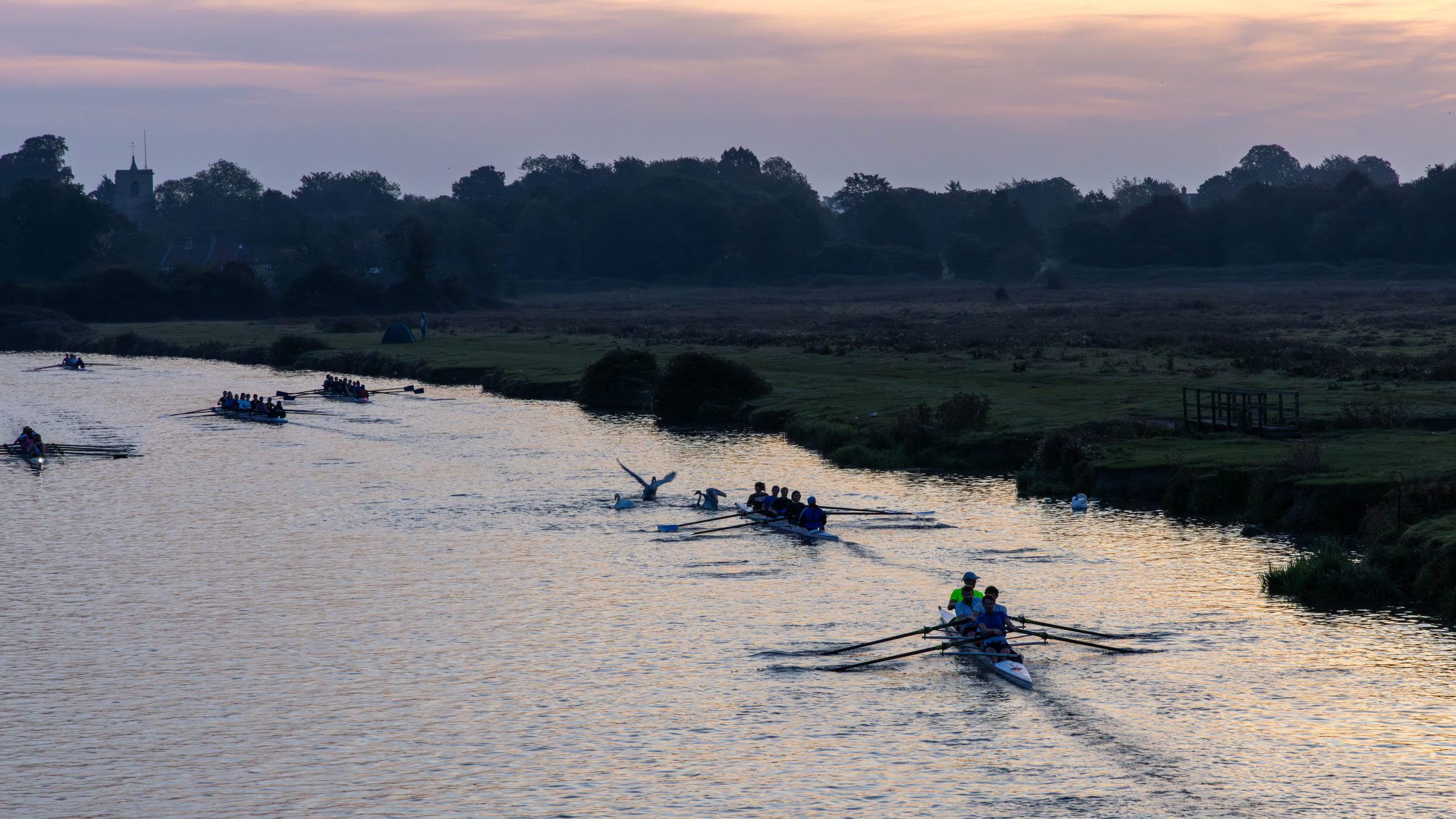
    I woke up just before it got light and rushed down the road to catch the sun, but then it was difficult to know with the clouds exactly when sunrise started and ended. Then similarly with the cloudy sunset, I just stayed till I got too cold. But waiting around for a sunset that never really happened was a good excuse to just hang around, looking as if I had purpose, but enabling ‘participant observation’ ie eavesdrop on all sorts of random conversations, watching how people enjoyed their evening and get greater spontaneous understanding of how people felt about the location and the time of day.

    I don’t think I got any stunning images. I was still getting to grips with a new camera, so the project was really good to experiment with settings in very different lighting conditions. The sunrise also is the time along the river when it is crowded with joggers and rowers with their accompanying minders on bikes. So it was also good practice in making instant decisions on how to balance the shutter speed, aperture and ISO to get different effects. Then thinking how I can ‘improve’ through minimal processing in Lightroom.

    Technical Issues and questions

    Shot on Canon R5 with 28 – 105mm Zoom with autofocus and image stabiliser

    The sunrise and sunset images were shot at 1250 – 1600 ISO at -1EV in order to expose for sunlight highlights and get enough shutter speed to get reasonably sharp movement. Tripod would have not achieved this. These images were pretty noisy so I used Lightroom Denoise AI. Is there any way I can get better sunrise and sunset shots? Am I missing something obvious?

    In order to develop the book we worked on Teams, which proved pretty smooth to combine text chat and video calls to both pc and iPhone.

    We each sent an initial selection of images. I did an initial design mock-up, we then reviewed our selection of images to make a narrative.

    I think this was probably easier because there were only two of us. It might well be much more complex with more people.

    https://photography.zemniimages.info/theory-genre-concept/appropriation-and-authorship/
  • Summer Garden

    Stephen Gill Birds taking off, Trail Cam footage.

    Snails and slugs

    SloMo light?

    Solarplate and Cyanotype

    Moving Image

    Trailcam??

  • Designing a project brief

    Project briefs are of different types and allow different levels of negotiation and artistic freedom.

    (what follows is from the Course Manual and will be revisited in Assignment 5)

    Commercial (client-led) briefs
    Any engagement with commercial photographic enterprise will involve a brief of some kind. This may be in the form of a legally binding contract, or it may be something much more informal. In a commercial context, a brief will usually be a document that is the conclusion of a verbal or email discussion about what the client is hoping to achieve from a shoot – i.e. what they want you to communicate with your photographs – and, importantly, what the intended outcome will be. Will the photographs be used in a book, for example? Or on a website? This second aspect has important ramifications in relation to the size, format and quality of files they are expecting, and may influence your choice of equipment. A brief written by a client may be fairly openended or it may include a list of specific products or subjects that need to be photographed, including aspect ratio and crop. It may be something prescriptive, to be referred to throughout the shoot, or something more abstract that you will respond to photographically using your own initiative.

    A brief should align the expectations of the clients with a realistic outcome on the part of the photographer. Whether you’re being paid generously for your services or doing a job as a favour, it is extremely important to have, in writing (email is fine), an agreement that clearly identifies the needs of the client and what you agree to supply them with, in order to prevent at best disappointment, or at worst, being sued. A brief should include the following:
    • A summary of the project and general purpose of the photographs.
    • What the photographs should communicate.
    • A list of any specific shots the client would like.
    • The amount of time that you will spend on the shoot (hours? days?) and timings.
    • The number of images you will supply to the client, and whether they will be processed or unprocessed.
    • Your fee, as well as/including any expenses you will incur.
    • Whether (if working digitally) your time for file processing is included or, if not, how this File format and size of processed images (and possibly colour profile and bit-depth).
    • Permission for using your photographs from the shoot: how will you permit the client to use your images, and for what period of time?
    • Whether you will administer Model and/or Property Release Forms.
    • Details of any other parties involved in the shoot, e.g. models/subjects.
    People who are in a position to commission photography may do so on a regular basis and, if so, will be expert in drawing up a brief and/or contract; other, just as valuable, clients may not. It may be down to you to put into writing their verbal description of what they want you to do. Forming a brief should be a negotiation between you and the client, and the specifics will depend on many factors, including your own particular workflow. The important thing is to make
    sure all parties are content with all aspects of the brief before commencing a shoot.

    [Although briefs are not discussed specifically, a wealth of related information can be found in Beyond the Lens: Rights, Ethics and Business Practice in Professional Photography, London: The Association of Photographers]

    Self-authored briefs
    This and subsequent courses you may study with OCA will ask you to set your own assignment briefs. The purpose of this is to allow you more creative freedom, to help you become a more independent student, and to encourage you to think of yourself as a creative, independent practitioner pursuing your own interests and working on personal projects, as opposed to making work within the confines of a prescriptive art and design course.
    Developing the ability to articulate your ideas for projects or enterprises is an essential skill for professional practice, within both commercial and art-based practice. For instance, you may identify a potential business opportunity to collaborate with an organisation that might be able to commission you, and approach them to propose a project. Or you may have an idea for a documentary or fine art project and need to apply for funding. In either case, you’ll need to
    write a brief. (This is explored further at Level 3.)

    A self-directed brief, particularly one conceived within an arts context (e.g. an academic environment such as OCA, or a proposal to a funding body such as the Arts Council – www. artscouncil.org.uk) will include some, but not necessarily the majority of the points listed above. You’ll still need to discuss money, in particular your justification for any special resources you may require. Appropriately contextualising the project within a critical framework rather than an economic one will be the most significant difference between the two types of brief. If you’re requesting funding or support for production, for an exhibition or publication, or for an artist’s residency, you must be able to convince whoever writes the cheques that you’re conversant with the subject you wish to research and that you have the ability and commitment to complete
    the project.

    Unlike a commercial brief, a self-directed brief is not a rigid plan but a more organic document, which you’ll appraise and update as you go along. This is certainly the case with the selfdirected projects you’ll propose whilst studying with the OCA.

  • What is a Photographer?

    Marius de Zayas (1880-1961) closely allied to the 291 gallery. Photography and Photography and Artistic Photography first published Camera Work no 41 (1913)

    de Zayas makes a dichotomous distinction between:

    the ‘artist photographer’ who tries to represent something from within themselves as a ‘systematic and personal representation’ that then applies this to study of external form – an example being Steichen.

    Steichen images from Google

    ‘photographers’ who try to represent external reality based on ‘free and external’ investigation and research, bringing these different objective elements together into one communicated image – an example being Stieglitz.

    Stieglitz images from Google

    I see this distinction as continuing to be valid, but more in terms of a continuum than a dichotomy. As a researcher I am very well aware that practically all research (even scientific research but particularly social research) is inevitably informed by subjective perspectives on the important questions to ask, how to ask them and how to analyse the responses. In addition there are considerable individual as well as cultural variations even in eg perception of colour and shape. On the other hand pure abstraction and subjectivity is also nearly impossible as our thought processes are dependent and in many ways determined by external experience.

    The extremes of the continuum have arguably become further apart as digital imaging has significantly broadened the possibilities for artist photographers and technological advances have enabled possibilities for reproducing a greater range of tones and colours to represent and objectively calibrate (eg through use of histograms) to what the photographer concludes as ‘external reality’.

    A further element that does not come into de Zayas’ framework is the response of the viewer and the degree to which anticipated responses of different audiences affect both the investigation of external reality and ways of communicating subjectivity. Digital media offer interesting new possibilities for photographer/viewer interactivity.

    ————————————–

    key quotes

    ‘Photography is not Art, but photographs can be made to be Art…

    …The difference between Photography and Artistic-Photography is that, in the former, man [sic!!!!] tries to get at that objectivity of Form which generates the different conceptions that man has of Form, while the second uses the objectivity of Form to express a preconceived idea in order to convey an emotion. The first is the fixing of an actual state of Form, the other is the representation of the objectivity of Form, subordinated to a system of representation. The first is a process of indignation, the second a means of expression. In the first, man tries to represent something that is outside of himself; in the second he tries to represent something that is in himself. The first is a free and impersonal research, the second is a systematic and personal representation.
    The artist photographer uses nature to express his individuality, the photographer puts himself in front of nature, and without preconceptions, with the free mind of an investigator, with the method of an experimentalist, tries to get out of her a true state of conditions…

    Up to the present, the highest point of these two sides of Photography has been reached by Steichen as an artist and by Stieglitz as an experimentalist.
    The work of Steichen brought to its highest expression the aim of the realistic painting of Form. In his photographs he has succeeded in expressing the perfect fusion of the subject and the object. He has carried to its highest point the expression of a system of representation: the realistic one.
    Stieglitz has begun with the elimination of the subject in represented Form to search for the pure expression of the object. He is trying to do synthetically, with the means of a mechanical process, what some of the most advanced artists of the modern movement are trying to do analytically with the means of Art.

    ????I am not sure I understand this.

    It would be difficult to say which of these two sides of Photography is the more important. For one is the means by which man fuses his idea with the natural expression of Form, while the other is the means by which man tries to bring the natural expression of Form to the cognition of the mind.

  • Beginnings of Photography

    (edited from Wikipedia various)

    The word “photography” was created from the Greek roots φωτός (phōtos), genitive of φῶς (phōs), “light” and γραφή (graphé) “representation by means of lines” or “drawing”, together meaning “drawing with light”.

    Wikipedia links:  History of photography History of the camera

    Several people may have coined the same new term from these roots independently. Hercules Florence, a French painter and inventor living in Campinas, Brazil, used the French form of the word, photographie, in private notes which a Brazilian photography historian believes were written in 1834. Johann von Maedler, a Berlin astronomer, is credited in a 1932 German history of photography as having used it in an article published on 25 February 1839 in the German newspaper Vossische Zeitung. Both of these claims are now widely reported but apparently neither has ever been independently confirmed as beyond reasonable doubt.

    Credit has traditionally been given to Sir John Herschel both for coining the word and for introducing it to the public. His uses of it in private correspondence prior to 25 February 1839 and at his Royal Society lecture on the subject in London on 14 March 1839 have long been amply documented and accepted as settled facts.

    Precursor technologies

    Photography is the result of combining several technical discoveries.

    Pinhole camera or camera obscura: The camera obscura literally means “dark chamber” in Latin. It is a box with a hole in it which allows light to go through and create an image onto the piece of paper. The discovery of the camera obscura that provides an image of a scene dates back to ancient China.  Chinese philosopher Mo Di and Greek mathematicians Aristotle and Euclid described a pinhole camera in the 5th and 4th centuries BCE. In the 6th century CE, Byzantine mathematician Anthemius of Tralles used a type of camera obscura in his experiments, Ibn al-Haytham (Alhazen) (965–1040) studied the camera obscura and pinhole camera. Renaissance painters used the camera obscura which, in fact, gives the optical rendering in color that dominates Western Art. Leonardo da Vinci mentions natural cameras obscura that are formed by dark caves on the edge of a sunlit valley. A hole in the cave wall will act as a pinhole camera and project a laterally reversed, upside down image on a piece of paper.

    Methods of reproducing and fixing the image: Silver Nitrate and Silver Chloride: Albertus Magnus (1193–1280) discovered silver nitrate,[12] and Georg Fabricius (1516–71) discovered silver chloride. Techniques described in the Book of Optics are capable of producing primitive photographs using medieval materials. Daniele Barbaro described a diaphragm in 1566. Wilhelm Homberg described how light darkened some chemicals (photochemical effect) in 1694. The fiction book Giphantie, published in 1760, by French author Tiphaigne de la Roche, described what can be interpreted as photography.

    The first success of reproducing images without a camera occurred when Thomas Wedgwood, from the famous family of potters, obtained copies of paintings on leather using silver salts. Since he had no way of permanently fixing those reproductions (stabilizing the image by washing out the non-exposed silver salts), they would turn completely black in the light and thus had to be kept in a dark room for viewing.

    First camera photography (1820s)

    Photography as a usable process dates to the 1820s with the discovery of chemical photography. The first permanent photoetching was an image produced in 1822 by the French inventor Nicéphore Niépce, but it was destroyed in a later attempt to make prints from it. Niépce was successful again in 1825. He made the View from the Window at Le Gras, the earliest surviving photograph from nature (i.e., of the image of a real-world scene, as formed in a camera obscura by alens), in 1826 or 1827.
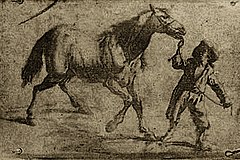
    Earliest known surviving heliographic engraving, 1825, printed from a metal plate made by Joseph Nicéphore Niépce with his “heliographic process”. The plate was exposed under an ordinary engraving and copied it by photographic means. This was a step towards the first permanent photograph from nature taken with a camera obscura, in 1826.

    Because Niépce’s camera photographs required an extremely long exposure (at least eight hours and probably several days), he sought to greatly improve his bitumen process or replace it with one that was more practical. Working in partnership with Louis Daguerre, he discovered a somewhat more sensitive process that produced visually superior results, but it still required a few hours of exposure in the camera. Niépce died in 1833 and Daguerre then redirected the experiments toward the light-sensitive silver halides, which Niépce had abandoned many years earlier because of his inability to make the images he captured with them light-fast and permanent. Daguerre’s efforts culminated in what would later be named the daguerreotype process, the essential elements of which were in place in 1837. The required exposure time was measured in minutes instead of hours. Daguerre took the earliest confirmed photograph of a person in 1838 while capturing a view of a Paris street: unlike the other pedestrian and horse-drawn traffic on the busy boulevard, which appears deserted, one man having his boots polished stood sufficiently still throughout the approximately ten-minute-long exposure to be visible. Eventually, France agreed to pay Daguerre a pension for his process in exchange for the right to present his invention to the world as the gift of France, which occurred on 19 August 1839.
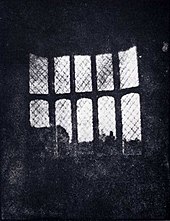
    A latticed window inLacock Abbey, England, photographed by William Fox Talbot in 1835. Shown here in positive form, this may be the oldest extant photographic negative made in a camera.

    Meanwhile, in Brazil, Hercules Florence had already created his own process in 1832, naming it Photographie, and an English inventor, William Fox Talbot, had created another method of making a reasonably light-fast silver process image but had kept his work secret. After reading about Daguerre’s invention in January 1839, Talbot published his method and set about improving on it. At first, like other pre-daguerreotype processes, Talbot’s paper-based photography typically required hours-long exposures in the camera, but in 1840 he created the calotype process, with exposures comparable to the daguerreotype. In both its original and calotype forms, Talbot’s process, unlike Daguerre’s, created a translucent negative which could be used to print multiple positive copies, the basis of most chemical photography up to the present day. Daguerreotypes could only be replicated by rephotographing them with a camera.[21] Talbot’s famous tiny paper negative of the Oriel window in Lacock Abbey, one of a number of camera photographs he made in the summer of 1835, may be the oldest camera negative in existence.[22][23]

    John Herschel made many contributions to the new field. He invented the cyanotype process, later familiar as the “blueprint”. He was the first to use the terms “photography”, “negative” and “positive”. He had discovered in 1819 that sodium thiosulphate was a solvent of silver halides, and in 1839 he informed Talbot (and, indirectly, Daguerre) that it could be used to “fix” silver-halide-based photographs and make them completely light-fast. He made the first glass negative in late 1839.

    In the March 1851 issue of The Chemist, Frederick Scott Archer published his wet plate collodion process. It became the most widely used photographic medium until the gelatin dry plate, introduced in the 1870s, eventually replaced it. There are three subsets to the collodion process; the Ambrotype (a positive image on glass), the Ferrotype or Tintype (a positive image on metal) and the glass negative, which was used to make positive prints on albumen or salted paper.

    Many advances in photographic glass plates and printing were made during the rest of the 19th century. In 1884, George Eastman invented an early type of film to replace photographic plates, leading to the technology used by film cameras today.

    In 1891, Gabriel Lippmann introduced a process for making natural-color photographs based on the optical phenomenon of the interference of light waves. His scientifically elegant and important but ultimately impractical invention earned him the Nobel Prize for Physics in 1908.