
26 Different Endings by Mark Power often employs a specific strategy to take him to particular locations and make photographs. This series began as a response to the once ubiquitous – but perhaps soon to be a thing of the past – A–Z London Street Atlas. Power describes the work as a ‘system of edges’ and a tribute to the ‘unfortunate places’ that are excluded from the current version of the street atlas, which is an arbitrary decision taken by somebody from year to year. Power obviously had an infinite number of potential views to choose from each page, spreading outwards from the map’s edges, and his photographic responses to the places that he arrived at were of course subjective.
Category: UK
-
Peter Kennard
Peter Kennard (born 17 February 1949) is a London born and based photomontage artist and Senior Research Reader in Photography, Art and the Public Domain at the Royal College of Art. Seeking to reflect his involvement in the anti-Vietnam War movement, he turned from painting to photomontage to better address his political views.He has often worked in collaboration with writers, photographers, filmmakers and artists such as Peter Reading, John Pilger and Jenny Matthews.
He is best known for the images he created for the Campaign for Nuclear Disarmament (CND) in the 1970s–80s. This includes “Haywain with Cruise Missiles“, a cut-and-paste photomontage of Constanble’s Haywain – a symbol of Britain’s rural idyll with American missiles used by CND to highlight the threat of installation of cruise missiles at air bases across the UK, such as Greenham Common.
“ Photomontage may not be subtle but it is effective as a tactic when the aim is to make a point quickly and directly. We grasp immediately that Britain is under threat.” Liz Wells (2011, p.21 quoted Alexander 2013 p98)Because many of the left-wing organisations and publications he used to work with have disappeared, Kennard has turned to using exhibitions, books and the internet for his work.
In “Dispatches from An Unofficial War Artist”, his 2000 autobiography, he writes about the possibilities of undertaking an aesthetic practice in relation to social change, and considers how his art has interacted with the politics of actual events.
One of Kennard’s latest projects is 2011’s @earth, a story without words told in the language of photomontage. It takes the form of a small book priced at £9.99, published by the Tate Gallery, which Kennard believed was a reasonably cheap and accessible way of getting his message to young people outside the artworld. The book contains a variety of images from Kennard’s 40-year career and, as a result, attracts the criticism that its targets are too general. Kennard’s reply was that he wanted “to encourage people to think about their own situation and activate, but I’m not trying to tell them to do this or that. I’m just trying to show how I see the world at the moment.”The idea has expanded to a re-appropriation and re-distribution of his images through online platforms such as Tumblr, Facebook and Twitter. G8 Protest Posters is the latest of these projects that shares images “designed for protest”. Created in 2013 in reaction to the 39th G8 Summit in Enniskillen, Kennard has encouraged the public to “print, Tweet, Facebook, email and share these images as a sign of protest”. He sees online distribution sites as “a valuable addition to the dissident artists toolbox. G8 is a charade masquerading as a serious conference, my posters attempt to rip through the lies and point to the world as in fact it is.”
He has also executed a number of guerrilla street installations and has said “if world leaders insist on assaulting our lives and livelihoods, let’s hit back by assaulting their eyes.”
The first major retrospective of Kennard’s work will be held at the Imperial War Museum for one year from May 2015.
Source: edited from Wikipedia
-
Tim Simmons
From Out West 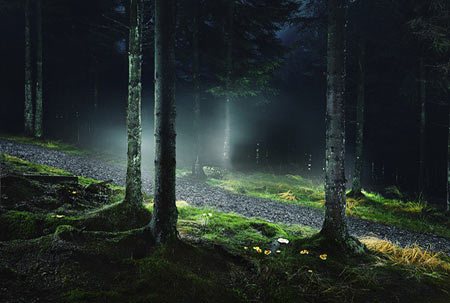
website: http://www.timsimmons.co.uk
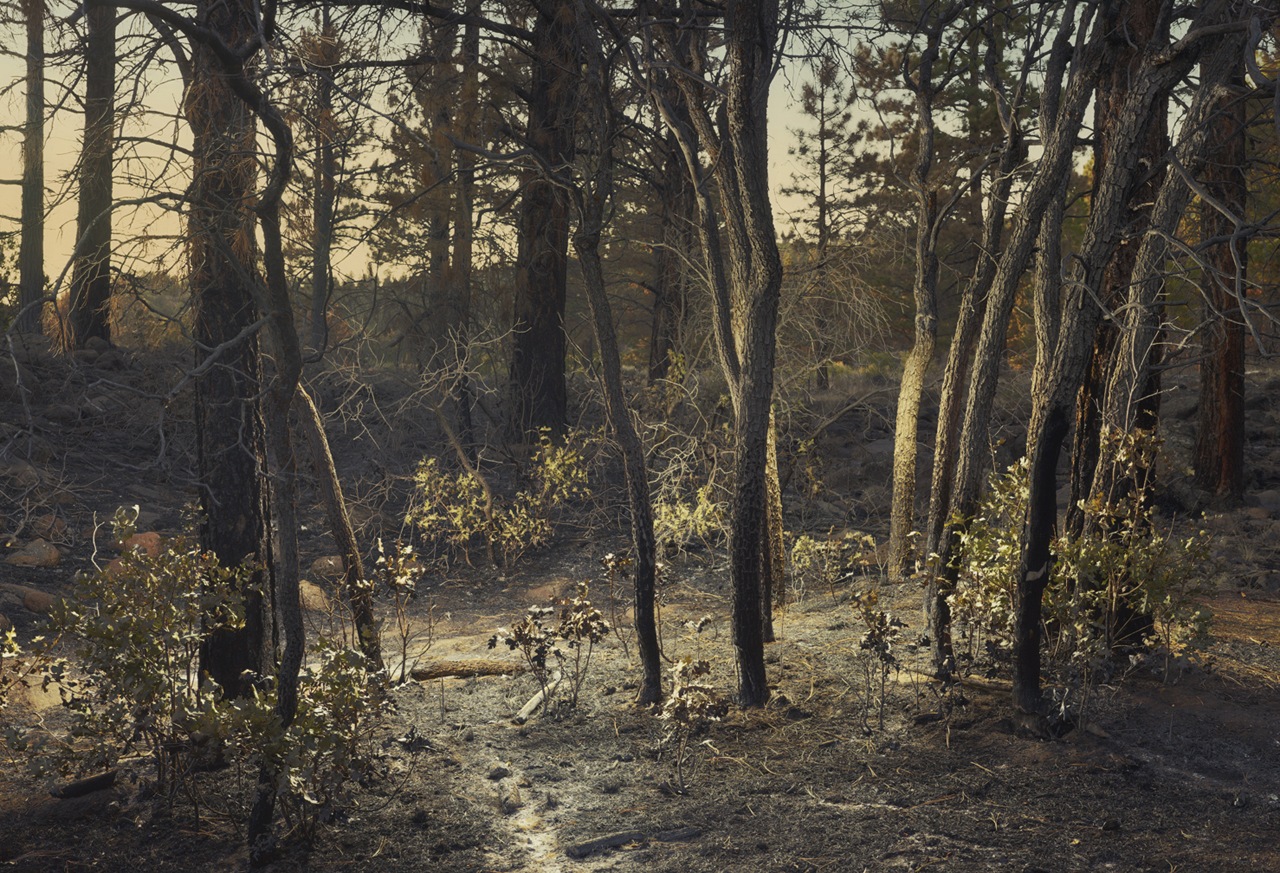
Simmons creates his nocturnal landscapes using fluorescent lamps and a range of post-production techniques. His images might be described as ‘hyper real’; they have an aesthetic that somehow seems to transcend photo-realism. They look almost artificial, like video game graphics.
Tim Simmons established a successful career within the field of motor photography. Simmons’s innovative lighting methods that brought him to the attention of advertising agencies, who wanted to place cars within his out-of-this-world landscapes.
His recent projects are more tightly cropped ‘vignettes’ or almost meditative viewpoints. Simmons locates his practice within a fine art context and has installed his images in temporary open-air exhibitions across the world, some of which, ironically, have been presented on billboards.
See: http://www.timsimmons.co.uk/showkase/ulp-billboards-2011/
-
James Morris
In Wales, particularly South Wales, the idea of ‘post-industry’ is poignant in the light of the well-documented, widespread decline in industrial activity in recent decades.
In A Landscape of Wales (2010), James Morris explores the diverse landscape of the country, including the Gothic-looking remains of slate quarries and other sublime-inspiring features. Most interestingly, Morris looks at how the tourism and heritage industries, which continue to play a major part in the Welsh economy, relate to the landscape. Morris provides an excellent example of the inextricable link between topography and industry, which have in turn shaped the identity of a place and its people. (Alexander course text p105)
See more from this series at:
http://www.jamesmorris.info (Flash-based site) -
John Davies
[wpdevart_youtube]BW44iNga8Fk[/wpdevart_youtube]John Davies website
John Davies (born 1949 in Sedgefield, County Durham, England) is a British landscape photographer. He is known for completing long-term projects documenting Britain and its industrial and urban landscape. He juxtaposes elements of history, industry and social activity within a single composition to critically examine our social geography.
The British Landscape is his best-known body of work
Fuji City Mount Fuji, Japan is a meditation on the balance between nature and industry.
The shift in subject matter also developed into a fascination with urban regeneration and work on this includes his Metropoli Project, City State, and Cities on the Edge, the latter of which he curated, in addition to contributing images of his own.
Not judgemental – ask questions. People have different reactions to different images. Doesn’t include many people, but images are about what people have done in the environment.
The caption to Davies’s Ffestiniog Railway image reads:
“The Ffestiniog Railway was originally built to transport local slate, but in
1964, following new connections to the national railway network, trains
began serving the Trawsfynydd nuclear power station. Although the
decommissioning of Trawsfynydd began in 1991, the railway continued
to be used daily to transport 50-ton flasks of nuclear fuel and waste to
the Sellafield reprocessing plant in Cumbria. Sellafield stopped taking
waste from Trawsfynydd in 1997.”Technique
He is known for producing large photographic prints of images produced from high vantage points, using traditional darkroom techniques. His work in the 1980s primarily used medium format cameras, and work from the 1990s alarge format camera, although in recent years he has begun using dSLR and digital medium format cameras in his work as well.
The stylistic components reference – with irony – the picturesque:
- Davies’s photographs are nearly always taken from high vantage points that hint towards a welltrodden, formalised ‘viewpoint’, looking out across views with foregrounds, middle distance and backgrounds (usually a rolling hill).
- He continues to work with black-and-white film, linking his work to the classical aesthetics of Adams and Weston.
Liz Wells (2011, pp.170–71) identifies a potential problem with Davies’s relation to the picturesque:
“… his work operates as a visual archive of post-industrial Britain. But his personal style is so marked that content risks becoming subservient within a generalised vision of industrial legacy in ways that work against any sense of the specificity of each site. There is a risk that political commentary is diluted rather than distilled, as the industrial becomes a strand within a new picturesque.”Biography
Davies was born in Sedgefield, County Durham, in 1949. He grew up in coal mining and farming communities, and this combination of open space and industry was to become a persistent motif in his creative work. His early life was spent living in industrial landscapes in County Durham and Nottinghamshire.
He studied Photography, first attending Mansfield School of Art to complete a Foundation Course, then studying at Trent Polytechnic (now Nottingham Trent University), graduating in 1974. Following this, he began working on long-term projects, seeking commissions and arts funding to support his work. He has worked closely with Amber/Side Collective on a number of commissions. In 1981, Davies won a one-year Photography Fellowship at Sheffield Polytechnic, and he became Senior Research Fellow at the Art School of University of Wales Cardiff (UWIC) in 1995.
He has also become involved in local politics, as his interest in the use of public space has been both personal and professional. He lives with his partner and their daughter Alix in Liverpool, England.
Books by Davies
- Aggie Weston’s no.13. Belper, Derbyshire: Stuart Mills, 1977 ASIN B0007C4X2C.
- The Valleys project. Cardiff: Ffotogallery, 1985.
- On the edge of White Peak. Derbyshire Museum Services, UK, 1985.
- In the wake of King Cotton. Rochdale Art Gallery, UK, 1986.
- Mist Mountain Water Wind. London: Traveling Light, 1986. ISBN 0-906333-18-0.
- A Green & Pleasant Land. Manchester: Cornerhouse, 1987. ISBN 0-948797-10-X soft cover ISBN 0-948797-15-0.
- Autoroute A26, Calais – Reims. Douchy, France: Mission Photogaphique Transmanche, 1989. ISBN 2-904538-16-X.
- Phase 11 (eleven). London: The Photographers’ Gallery; London: Davenport, 1991. ISBN 0-907879-27-6.
- Broadgate. London: Davenport, 1991.
- Cross Currents. Cardiff: Ffotogallery; Manchester: Cornerhouse, 1992. ISBN 0-948797-32-0.
- Linea di Confine della Provincia di Reggio Emillia Laboratorio di Fotografia 5. Arcadia Edizioni & Assessorato alla Cultra del Comune di Rubiera, Italy, 1992.
- Skylines. Valencia University, Imp. Mari Montanana, Spain, 1993.
- Through fire and water: River Taff. Oriel (The Arts Council of Wales’ Gallery, Cardiff); National Museum & Galleries of Wales, 1997. ISBN 0-946329-45-1.
- Sguardigardesani. Milan, Italy: Charta, 1999. ISBN 88-8158-223-6.
- Temps et Paysage. Tarabuste / Centre d’art et du Paysage, 2000. ISBN 2-84587-010-8.
- Visa III, Littoral / Le retour de la nature. Filigranes, 2001. ISBN 2-914381-17-4.
- Seine Valley. Le Point du Jour Editeur / Pole Image Haute-Normandie, France, 2002. ISBN 2-912132-21-5.
- The British Landscape. Chris Boot, 2006. ISBN 0-9546894-7-X.
- Cities on the Edge. Liverpool: Liverpool University, 2008. ISBN 978-1-84631-186-4.
- Urban Landscapes / Krajobrazy Miejskie. Poznań, Poland: Centrum Kultury ‘Zamek’, 2008.
- European Eyes on Japan / Japan Today volume 10. EU-Japan fest / European Eyes on Japan, 2008.
-
Helen Sear
Creative Wales award.
Not just the eye. Uses the hand to pain in parts. Sculptural and 3D form. Liberate from computer screen. Different types of paper. Or use CAD.
Body in the landscape, or landscape in the body
What does it mean to be both human and animal?
Wants to concentrate on unremarkable landscape – portrait of a field over a year. Landscape as a living being. And walk to a particular part of forest that changes through being cut down and exposes a particular view suddenly.
Pond 2011 installation at Crescent Arts Scarborough, UK, March 2011. video of frozen winter pond and trees. Occasional birds. Sheep in silhouette on the horizon.
-
Sara Pickering
Sarah Pickering has photographed training grounds for the fire and police service.
http://www.sarahpickering.co.uk/Works/Pulic-Order/workpg-01.html
In Public Order (2005), she photographed the £55 million facility in Kent that is used by the police for firearms and riot training. Her images contain no people – though the police service who supported her work wanted her to photograph action she felt that the images without people are more powerful.
Pickering’s images depict a truly uncanny space, some revealing creepily accurate architectural details, others displaying almost comical crudeness in the design of the state-of-the-art facility. The strange, two-dimensional façades of these ‘streets’ give the space a film set or theatre-like quality, in readiness for some grim and violent narrative to unfold… As a viewer one can imagine waking up in this peculiar world and wandering bewilderedly through an inescapable network of streets that don’t lead anywhere and doors that open onto nothing.
(Alexander 2013 p 95)
-
Patrick Shanahan
Patrick Shanahan examines the transition from one post-industrial space into a new kind of industry in his series Paradeisos (2005), which explores the creation of the Eden Project in Cornwall. Commencing in 1998, Shanahan’s photographs document the transformation of a redundant china quarry into one of the UK’s most celebrated tourist attractions.
See the work at: http://www.ffotogallery.org/patrick-shanahan-–-paradeisos
Flash-based website.
Only work I could find on the web were ‘New Images’ seaside pictures that seem to question the seaside idyll – is this the same Patrick Shanahan photographer? But not as punchy as those of Martin Parr. Some a bit gimmicky with different angles. Need to look again
-
Peter Kane
Significant Space (2005)
As part of the resolution to his Photography degree, Peter Kane revisited places depicted in his family’s photo album, which included himself as a boy. He travelled back to particular locations – some specific landmarks, others more non-descript parts of the landscape – and re-photographed the space according to the composition of the original photograph.
In the bottom left of the frame of Kane’s new images, he holds the original photograph. The inclusion of Kane’s hand makes a physical connection between himself and the photograph. This is in sharp focus, and the space beyond, which he has revisited, falls out of focus. On a visual level, this split between the two focal planes instantly draws the viewer to the ‘vintage’ photograph. This strategy creates a deliberate dichotomy between the photograph that Kane presents – literally from his own ‘point of view’ – and the scenery beyond. It is as if the actual space beyond is eclipsed; it has lost its relevance and no longer bears any relation to Kane’s actual sense of the place.
(Alexander 2013 p107)
(I could not find anything more on the web.)